
Why Competitors Get Cited by ChatGPT and Your Brand Doesn't: A Practical AI Search Audit
 Catalin Dinca
You ask ChatGPT to recommend tools in your category, and your closest competitor shows up by name. You ask again with a slightly different phrasing, and they show up again. Your product does the same job, sometimes better, but it's nowhere in the response.
This is one of the more frustrating moments in AI search, because it doesn't feel like a fair fight. Rankings in traditional search at least map to visible signals — backlinks, content depth, domain age. AI citations can feel arbitrary from the outside, especially when the competitor beating you doesn't obviously have a stronger product or a bigger marketing budget.
They aren't arbitrary. AI platforms cite sources based on identifiable patterns: trust signals, content structure, third-party coverage, and how clearly a source answers a specific question. A practical AI search audit makes those patterns visible so you can see exactly where you're losing and why, instead of guessing at explanations that may or may not be true.
This guide walks through how to run that analysis end to end and turn it into a prioritized action plan you can actually execute.
Why Citation Gaps Exist
Before diving into the process, it helps to understand the handful of reasons AI platforms consistently choose one brand over another that looks equally qualified on paper.
Third-party trust outweighs self-description. AI systems weigh what independent sources say about a brand more heavily than what the brand says about itself. A competitor with several detailed third-party reviews often beats a brand with a better product page but no outside coverage. This is arguably the single most consistent pattern across AI citation behavior, and it's the reason a strong product alone rarely guarantees strong AI visibility.
Specific, structured content gets cited more than general content. A page that directly answers "does this tool support X" is easier for an AI system to extract and cite than a broad product overview that mentions the feature in passing. AI retrieval systems tend to favor content that answers one question clearly over content that tries to cover many questions shallowly.
Recency matters. Content that has been updated recently is favored over content that hasn't changed in years, even if the older content is technically still accurate. A comparison page last touched two years ago can lose ground to a competitor's page updated last month, even if the older page's information hasn't actually gone stale.
Presence in the sources AI already trusts matters more than presence on your own site. If AI platforms are pulling from a specific set of comparison sites, directories, or review platforms in your category, being absent from those specific sources is often the single biggest driver of a citation gap. A brand can have excellent owned content and still lose visibility simply because it never earned a mention on the two or three third-party sites that dominate citations in its niche.
These factors rarely act alone. A competitor with strong third-party trust but thin, unstructured content can still lose ground to a brand that nails the content side, and the reverse is just as common. That's why your audit has to check each factor independently instead of assuming one explanation covers every missing citation — the same competitor might be beating you on authority for one prompt and on content structure for another.
An AI search audit is the process of checking each of these factors against your competitors, one at a time, instead of guessing which one is the problem.
Step 1: Map the Competitive Landscape
Start by building a list of prompts that reflect how your audience actually searches — category questions, comparison queries, and use-case-specific questions. Run each prompt across the AI platforms your audience uses, and record every brand mentioned, not just yours and your top competitor.
This step alone often reveals surprises. A competitor you don't think about much in traditional SEO might dominate AI citations in your category, while a competitor you watch closely in Google rankings might barely appear at all. AI visibility and search rankings don't always track the same companies, because the two systems weigh different signals and pull from different corners of the web.
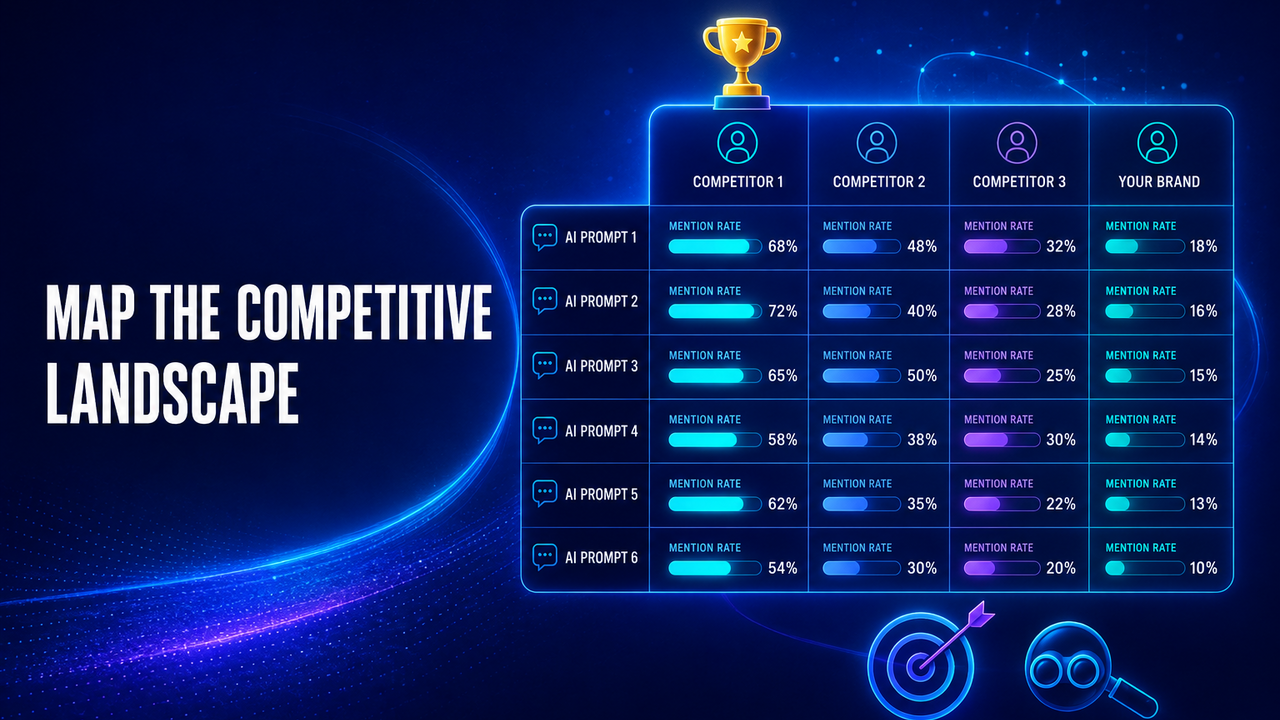
Keep this list per prompt, not aggregated, since the goal of the next steps is to explain gaps prompt by prompt. A brand that looks roughly even with competitors in an aggregate mention rate can still be losing badly on the three or four highest-intent prompts that matter most to revenue, and that detail disappears the moment everything gets averaged together.
Step 2: Analyze What's Actually Being Cited
For every prompt where a competitor appears and you don't, trace the response back to its likely sources. Some AI platforms show citations directly; for others, you'll need to identify the third-party pages that are known to rank and get referenced for that query.
Look specifically at:
- Which third-party sites are cited — review platforms, comparison articles, industry roundups, directories
- What content format wins — is it a listicle, a head-to-head comparison, a detailed review, a Reddit thread?
- How the competitor is described — what specific claims, features, or use cases are mentioned alongside their name?
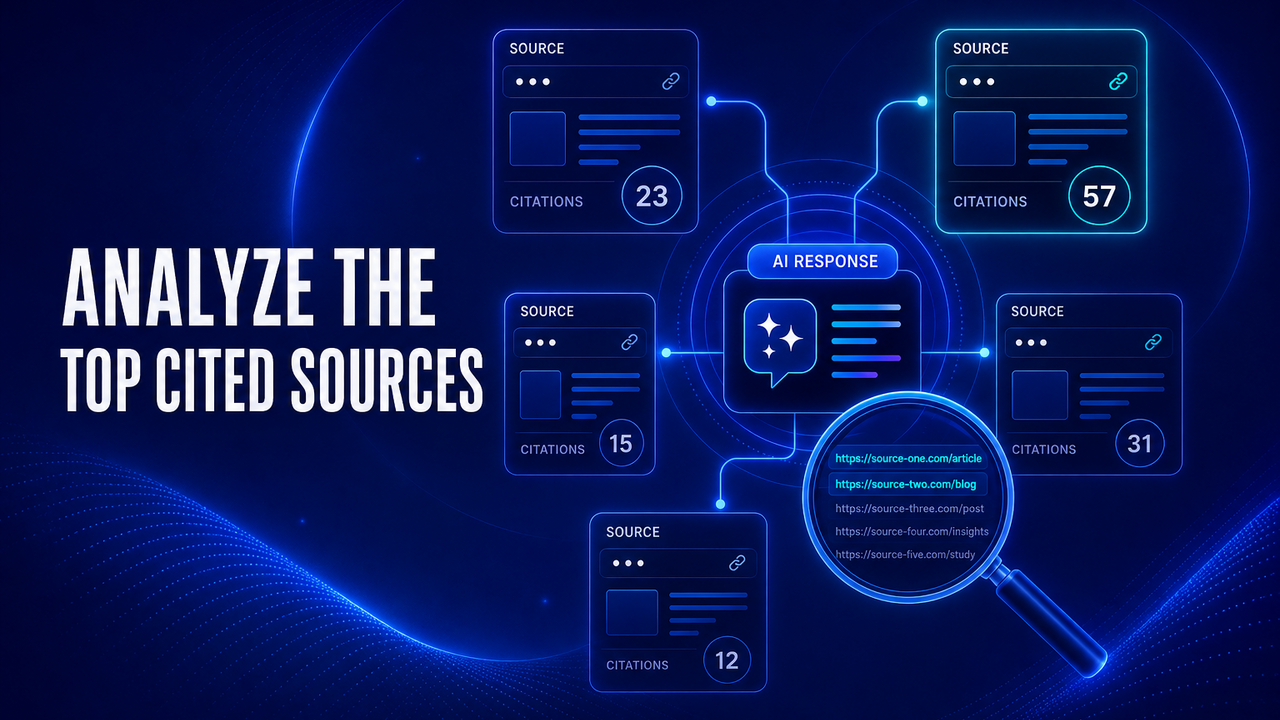
This step turns a vague sense of "they're more visible" into a concrete list of sources and content types you need to either get featured in or replicate on your own site. It's also usually the point where a pattern becomes obvious — most brands find that two or three sources account for the majority of the citations they're missing, rather than the gap being spread evenly across dozens of unrelated pages.
Step 3: Identify Your Specific Gap Type
Most citation gaps fall into one of three categories, and the fix is different for each.
Content gap. You don't have a page that answers the specific question being asked as directly as your competitor's page does. The fix is creating that page, written to answer the question first and elaborate second. This is usually the fastest gap to close, since it depends entirely on your own execution rather than convincing a third party to cover you.
Authority gap. You have comparable content, but AI platforms are pulling from third-party sources that mention your competitor and not you. The fix is earned coverage — outreach to the specific comparison sites, directories, and review platforms identified in Step 2, not generic PR. This gap tends to take longer to close because it depends on someone else's editorial decision, but it's also usually the most durable once closed.
Freshness gap. Your content used to be competitive but hasn't been updated, while your competitor's has. The fix is a content refresh cycle rather than new content from scratch. This is often the cheapest gap to close, since the page and its existing authority already exist — it just needs updated data, examples, and a visible "last updated" signal.
Most brands have all three gap types at once, but usually one dominates for a given prompt category. Tagging each gap by type is what turns the analysis into a plan instead of a list of problems, and it also tells you roughly how long each fix will take, which matters when you're setting expectations with stakeholders.
Step 4: Close the Gaps in Priority Order
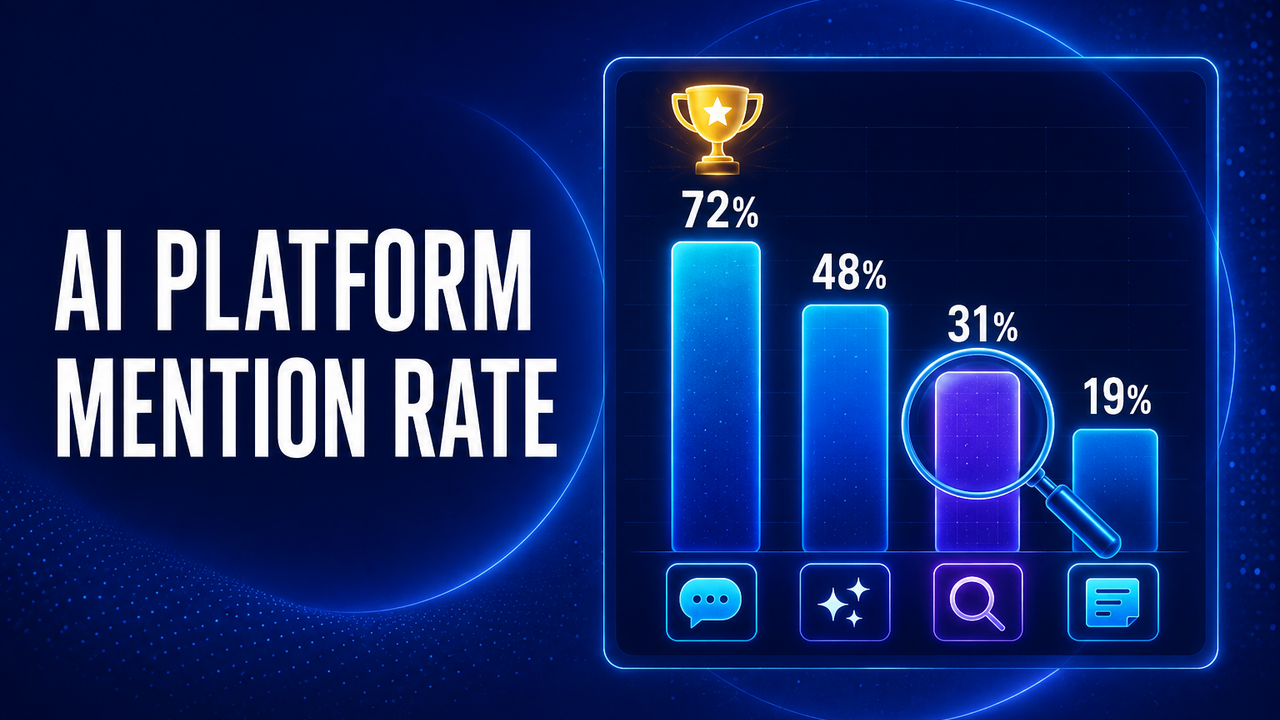
Not every gap deserves equal effort. Prioritize based on two factors: how often the underlying prompt comes up, and how large the visibility gap is against your top competitor for that prompt.
High-frequency prompts with a large gap are the clearest priority — they represent the most missed opportunity per unit of effort. Low-frequency prompts with a small gap can usually wait, even if closing them would still be a nice-to-have.
For content gaps, build the specific page that answers the question directly, matching or exceeding the depth of what's currently getting cited. For authority gaps, run targeted outreach to the exact third-party sources identified in your source analysis rather than broad, unfocused PR — a personalized pitch referencing the specific article and the competitors already listed in it converts far better than a generic press release. For freshness gaps, schedule updates to existing pages before creating anything new, since a refresh is almost always cheaper than a rebuild.
Step 5: Monitor and Iterate
An AI search audit is not a one-time task. AI platforms update their training data, refresh their retrieval sources, and change how they weigh signals on an ongoing basis. A gap you close this quarter can reopen if a competitor earns new coverage or refreshes their content before you do.
Re-run your prompt list on a regular schedule, watch for movement in mention rate and position, and treat any reopened gap as a signal to repeat the review for that specific prompt rather than assuming the earlier fix still holds. Brands that treat this as a recurring process rather than a one-off project tend to keep their citation advantage far longer than those that check once, fix what they find, and move on.
Common Mistakes That Undermine the Audit
A structured process still fails if it's executed poorly. These are the mistakes that show up most often.
Comparing yourself only to your closest competitor. The brand dominating AI citations in your category isn't always the one you compete with hardest on price or features. Track every brand that appears across your prompt list, not just the one or two you already think of as direct competitors.
Fixing content gaps while ignoring authority gaps. Publishing a better page doesn't help if AI platforms are pulling their answer from a third-party comparison site that never mentions you at all. Content and outreach need to move together, not in sequence, especially when the underlying gap is clearly an authority gap rather than a content gap.
Running the analysis once and calling it done. Because AI training data and retrieval sources change continuously, an AI search audit has a shelf life measured in weeks, not quarters. Treating it as a single project rather than a recurring process is the most common reason brands lose ground they had previously gained.
Chasing every gap at once. Spreading limited content and outreach resources across dozens of small gaps usually produces less visible movement than concentrating the same resources on the three or four highest-priority gaps identified in Step 4.
Find and Close Your AI Visibility Gaps with RankTim
Manually running dozens of prompts across multiple AI platforms, tracing every citation back to its source, and repeating the process every few weeks isn't realistic without help.
RankTim automates competitor tracking across ChatGPT, Google AI Overviews, and other AI platforms, and its Source Attribution feature shows you exactly which third-party pages are driving your competitors' citations — the exact data this kind of audit depends on.
- See where competitors outrank you prompt by prompt, platform by platform
- Identify the third-party sources driving their citations, so outreach is targeted instead of generic
- Track gap closure over time as your content and coverage improve
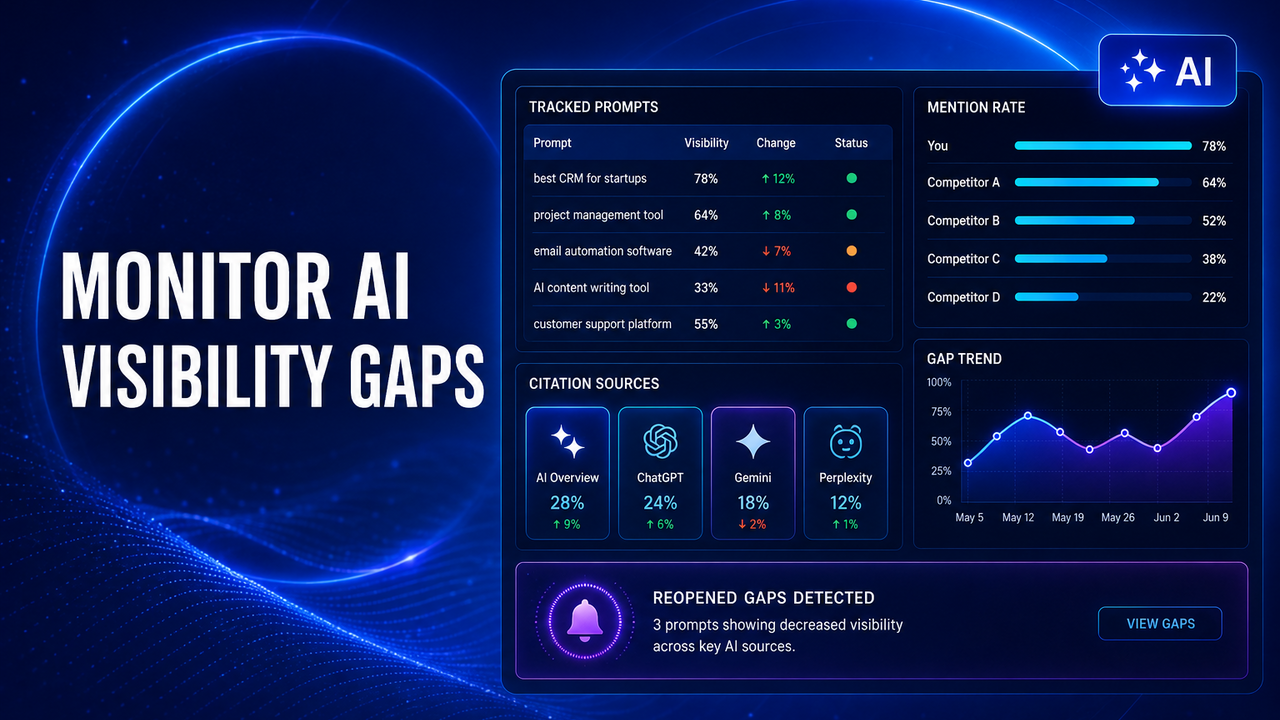
RankTim turns a one-time audit into an ongoing competitive advantage instead of a report that goes stale in a month.
Gap Types and How to Fix Them
| Gap Type | What's Missing | How to Close It | |||| | Content Gap | A page that directly answers the specific prompt | Create focused, direct-answer content matching or exceeding what's cited | | Authority Gap | Third-party mentions on the sources AI already trusts | Targeted outreach to the specific sites identified in your source analysis | | Freshness Gap | Recently updated content on the topic | Scheduled content refresh instead of net-new pages |
Frequently Asked Questions About Why Competitors Get Cited by ChatGPT
How often should I re-run this AI search audit?
A monthly cadence works well for most brands, with a lighter check every one to two weeks on your highest-priority, highest-frequency prompts. AI platforms change their cited sources often enough that a quarterly-only schedule will miss meaningful movement.
Is it normal for a smaller brand to have a large citation gap against a bigger competitor?
Yes, but the gap is rarely purely about size. It's more often about which specific third-party sources the bigger competitor has secured mentions on. Closing an authority gap against a larger competitor is achievable because AI platforms reward relevance and specificity, not just brand size.
Should I focus on content gaps or authority gaps first?
Start with whichever gap type is driving the highest-frequency prompts where you're missing entirely, regardless of type. If both are roughly equal in priority, content gaps are usually faster to close since they don't depend on a third party's editorial timeline.
Can I run this audit without access to a paid tracking tool?
You can run a basic version manually by asking the same prompts across platforms every few weeks and logging results in a spreadsheet, but it becomes difficult to spot patterns or catch a reopened gap quickly without consistent, automated tracking across a large enough prompt set.
What if a competitor is cited on a source I have no realistic way to get featured on?
Treat that source as a benchmark rather than a target. Study what specifically it says about your competitor and use that language and structure as a model for content on your own site or for outreach to comparable, more accessible sources in the same category.
Does closing a gap on one AI platform help on the others too?
Sometimes, but not automatically. Earned coverage on a widely cited, high-authority source tends to lift citations across most platforms because it strengthens the general trust signal around your brand. A narrow content fix aimed at one specific prompt format, on the other hand, may only move the needle on the platform where that format is favored, so it's worth checking each platform separately after closing a gap rather than assuming the fix carried over everywhere.
Final Thoughts
Losing AI visibility to a competitor isn't random, and it isn't a sign that your product is worse. It's almost always traceable to a specific, fixable pattern — a missing page, a missing third-party mention, or content that hasn't been touched in too long.
A structured AI search audit replaces the frustration of "why do they show up and we don't" with a prioritized list of exactly what to fix. Run it prompt by prompt, tag each gap by type, and close the highest-impact ones first.
Do this consistently, and the gap stops being a mystery and starts being a roadmap.

Catalin Dinca
Written by Catalin Dinca